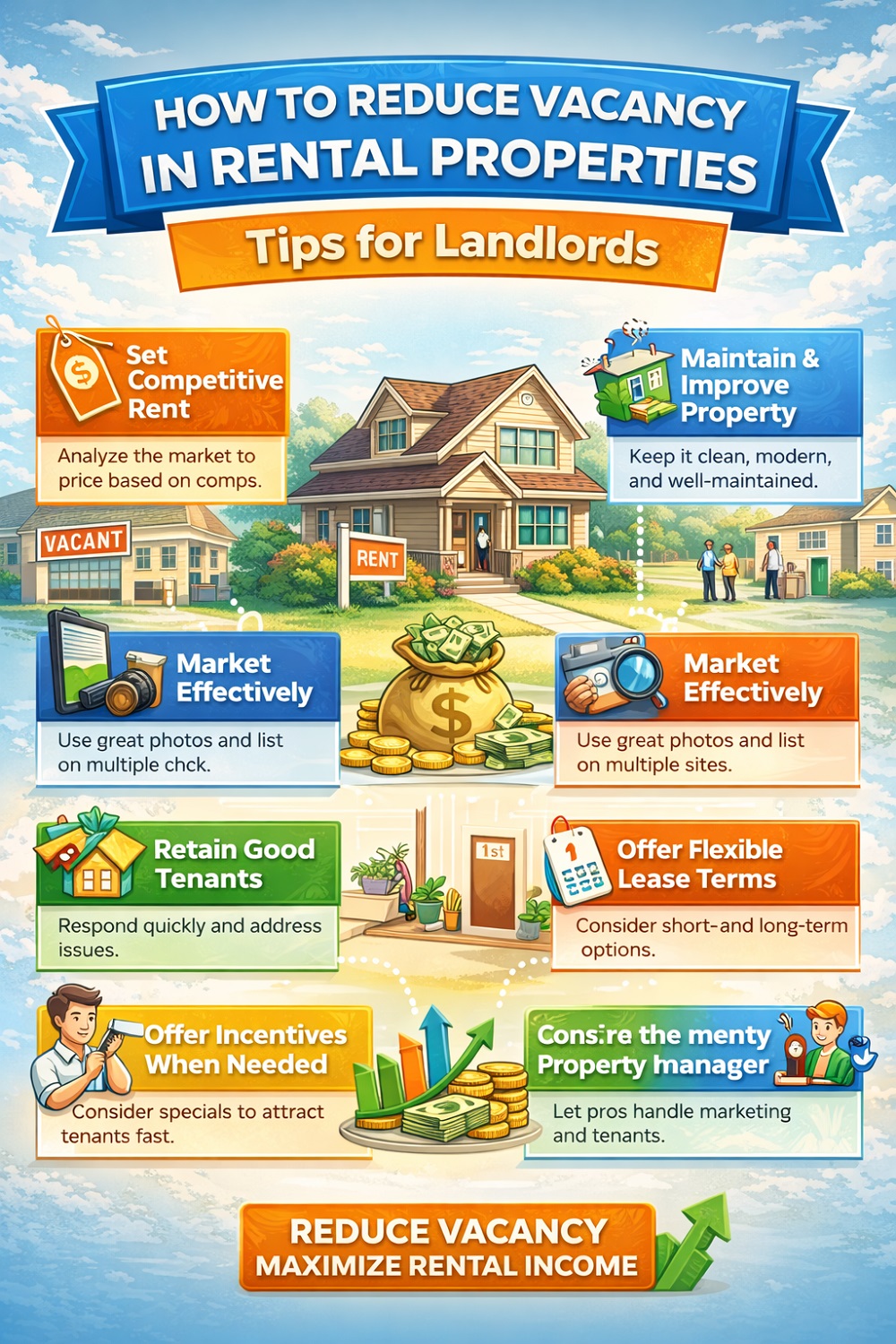
Vacancy is one of the biggest threats to your success as a real estate investor.
Every day your rental property sits empty, you’re losing money—not just rent, but also covering expenses like mortgage payments, taxes, insurance, and maintenance.
👉 The key to maximizing profits is minimizing vacancy.
In this comprehensive guide, you’ll learn strategies tips to reduce vacancy in rental properties, keep tenants longer, and create consistent cash flow.
Why Vacancy Hurts Your ROI
Vacancy doesn’t just reduce income—it directly impacts your return on investment.
ROI=Net IncomeTotal Investment×100ROI = \frac{Net\ Income}{Total\ Investment} \times 100ROI=Total InvestmentNet Income×100
When your property is vacant:
- Rental income = $0
- Expenses continue
- ROI drops significantly
Even a 1–2 month vacancy per year can cut your annual returns dramatically.
What Causes Vacancy in Rental Properties?
Before fixing vacancy, you need to understand what causes it.
Common Reasons for Vacancy:
- Overpriced rent
- Poor property condition
- Bad location or marketing
- Weak tenant screening
- Poor landlord communication
- High tenant turnover
👉 The good news: Most of these are controllable.
1. Price Your Rental Property Correctly
One of the biggest mistakes landlords make is overpricing rent.
Why Overpricing Backfires
- Fewer inquiries
- Longer vacancy periods
- Eventually forced price reductions
👉 A vacant unit at $2,200 earns less than an occupied unit at $2,000.
How to Set the Right Rent
- Research comparable rentals (same area, size, features)
- Check online listings (Zillow, Rentometer, Apartments.com)
- Analyze seasonal demand
Pro Tip:
👉 Price slightly below market value to attract more applicants quickly.
This can:
- Reduce vacancy
- Increase competition
- Help you select better tenants
2. Improve Your Property’s Condition
Tenants want clean, modern, and well-maintained homes.
High-Impact Upgrades
- Fresh paint
- Updated lighting fixtures
- Clean flooring or new carpet
- Modern appliances
- Landscaping and curb appeal
First Impressions Matter
Your property must stand out within seconds.
Ask yourself:
👉 Would YOU rent this property?
If not, tenants won’t either.
3. Market Your Property Effectively
Even great properties sit vacant if no one sees them.
Use High-Quality Photos
- Bright, well-lit images
- Wide-angle shots
- Highlight key features
👉 Listings with professional photos get significantly more views.
Write Compelling Listings
Include:
- Clear description
- Key features (parking, laundry, upgrades)
- Nearby attractions (schools, shopping, transit)
Example:
❌ “2-bedroom apartment available”
✔ “Modern 2-bedroom apartment with updated kitchen, in-unit laundry, and walking distance to downtown”
List on Multiple Platforms
- Zillow
- Apartments.com
- Facebook Marketplace
- Craigslist
- Local rental groups
👉 More exposure = faster occupancy.
4. Respond Quickly to Inquiries
Speed matters more than most landlords realize.
Why Fast Responses Matter
- Renters contact multiple landlords
- First response often wins
Best Practices
- Reply within minutes or hours (not days)
- Use automated responses when possible
- Be professional and helpful
👉 Fast communication builds trust and increases conversion.
5. Screen Tenants Carefully
Filling a vacancy quickly is important—but filling it with the wrong tenant is worse.
What to Check
- Credit history
- Income (2.5–3x rent)
- Rental history
- Background checks
Why Good Tenants Reduce Vacancy
- Pay rent on time
- Stay longer
- Take care of the property
👉 Better tenants = lower turnover.
6. Reduce Tenant Turnover
The best way to reduce vacancy is simple:
👉 Keep your current tenants longer
Why Tenants Leave
- Rent increases
- Poor maintenance
- Bad communication
- Better options elsewhere
How to Keep Tenants
- Respond quickly to maintenance requests
- Maintain the property well
- Treat tenants with respect
- Offer lease renewal incentives
Offer Renewal Incentives
Examples:
- Small rent discounts
- Free cleaning
- Minor upgrades (new appliances, paint)
👉 Keeping a tenant is almost always cheaper than finding a new one.
7. Allow Flexible Lease Terms
Rigid lease terms can increase vacancy.
Consider Offering:
- 6-month leases
- 12-month leases
- Month-to-month options
Why Flexibility Works
- Attracts more renters
- Reduces gaps between tenants
👉 More options = more demand.
8. Focus on Curb Appeal
Your property’s exterior is the first thing renters see.
Easy Improvements
- Clean landscaping
- Fresh exterior paint
- Power wash driveway and walls
- Add outdoor lighting
👉 A well-maintained exterior increases interest instantly.
9. Offer Amenities Tenants Want
Adding the right features can make your property more desirable.
High-Demand Amenities
- In-unit laundry
- Parking
- Air conditioning
- High-speed internet
- Smart home features
Small Upgrades, Big Impact
Even minor additions can:
- Increase rent
- Reduce vacancy
- Attract better tenants
10. Work with a Property Manager
If managing everything yourself is overwhelming, consider hiring a professional.
Benefits of Property Managers
- Faster tenant placement
- Professional marketing
- Better tenant screening
- Reduced vacancy periods
When It Makes Sense
- You own multiple properties
- You live far from your rental
- You want passive income
👉 A good property manager can pay for themselves.
11. Time Your Listings Strategically
Seasonality affects rental demand.
Best Times to Rent
- Spring and summer = high demand
- Winter = slower market
Plan Ahead
- Start marketing 30–60 days before vacancy
- Schedule showings early
👉 Avoid gaps between tenants.
12. Keep Your Property Competitive
The rental market is always changing.
Stay Competitive By:
- Monitoring local rental prices
- Updating your property regularly
- Adjusting rent when needed
Avoid This Mistake
❌ Ignoring market trends
✔ Adapting to demand
13. Build a Strong Reputation
Your reputation as a landlord matters more than you think.
Why It Matters
- Tenants refer others
- Positive reviews attract renters
How to Build It
- Be responsive
- Be fair
- Be professional
👉 Happy tenants help fill future vacancies.
14. Use Technology to Your Advantage
Modern tools can streamline your rental business.
Helpful Tools
- Online rent collection
- Tenant screening software
- Listing automation tools
- Virtual tours
Virtual Tours = Faster Leasing
- Attract remote renters
- Save time on showings
👉 Technology helps you fill vacancies faster.
15. Offer Move-In Incentives
If your property isn’t renting quickly, incentives can help.
Examples
- First month free
- Reduced security deposit
- Free utilities for a limited time
When to Use Incentives
- Slow market conditions
- High competition
- Long vacancy periods
👉 A small incentive can save months of lost rent.
Common Mistakes That Increase Vacancy
Avoid these costly errors:
❌ Overpricing rent
❌ Poor property condition
❌ Slow response times
❌ Weak marketing
❌ Ignoring tenant needs
Final Thoughts: Focus on Consistency
Reducing vacancy isn’t about one strategy—it’s about combining multiple approaches:
- Competitive pricing
- Strong marketing
- Quality tenants
- Excellent management
👉 When done right, you can keep your property occupied year-round.
FAQs
What is a good vacancy rate?
A vacancy rate of 5% or less is considered strong.
How long should a rental stay vacant?
Ideally less than 30 days.
Is lowering rent always the best solution?
Not always—improving marketing or property condition can be more effective.
Ready to Maximize Your Rental Income?
Vacancy is inevitable—but long vacancies are not.
Start implementing these strategies today, and you’ll see:
✔ Faster tenant placement
✔ Higher occupancy rates
✔ Stronger cash flow
Because in real estate investing…
👉 Consistent income beats occasional profit.
Disclaimer:
The information provided in this article is for educational and informational purposes only and should not be considered financial, legal, or investment advice. Real estate investing involves risks, and you should conduct your own research and consult with a licensed professional before making any investment decisions.
No Responses