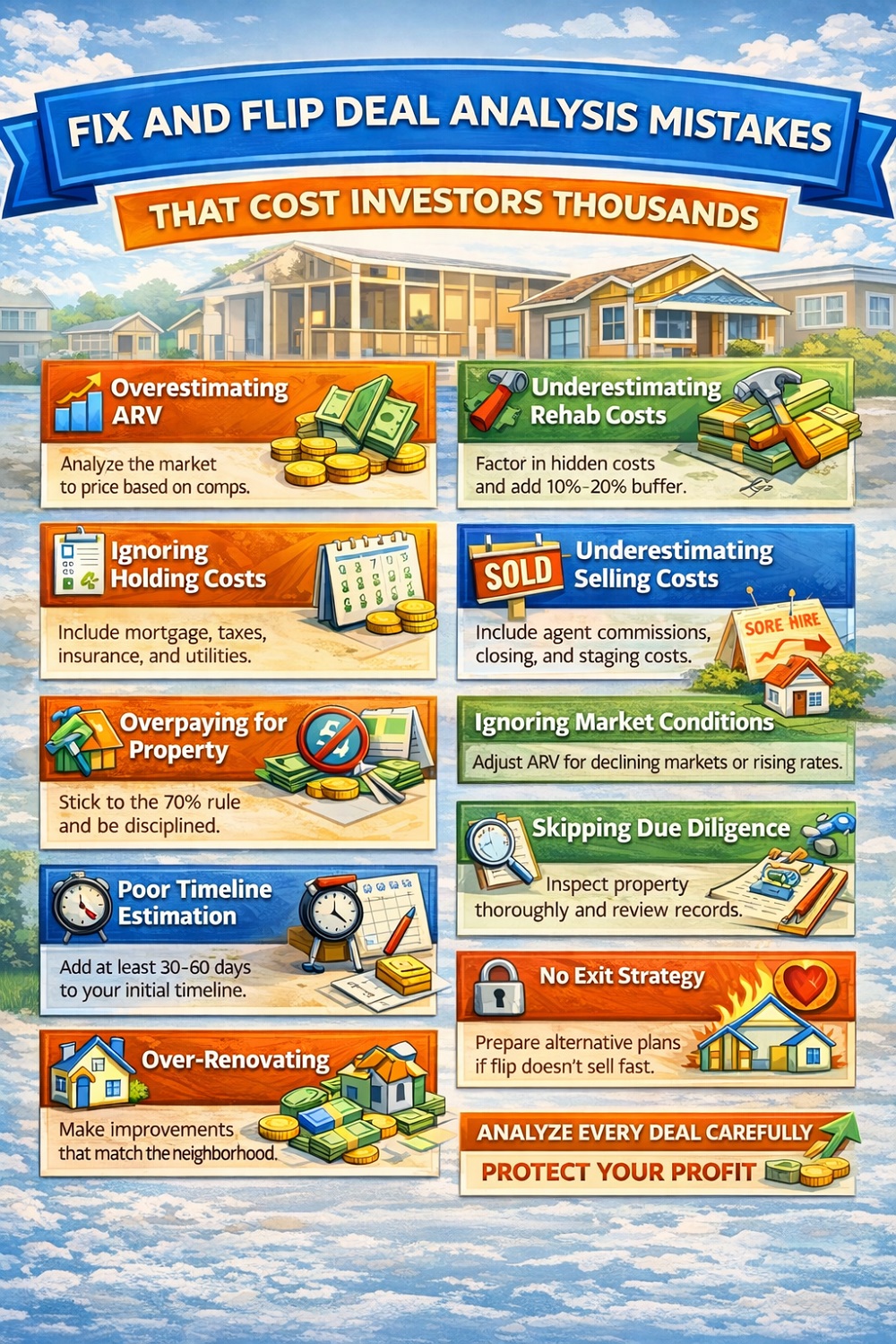
Fix and flip real estate investing can be incredibly profitable—but only if you get the numbers right.
The reality is:
👉 Most failed flips don’t fail because of bad properties—they fail because of bad analysis.
One small miscalculation can turn a profitable deal into a financial disaster.
In this guide, we’ll break down the most common fix and flip deal analysis mistakes that can cost investors thousands—and how to avoid them tips.
Why Deal Analysis Is Everything in Flipping
Unlike rental properties, flipping is a short-term, high-risk strategy.
You make money when you buy—not when you sell.
That’s why your deal analysis must be precise.
The Basic Flip Profit Formula
Before diving into mistakes, let’s understand the core formula:
Profit=ARV−(Purchase Price+Rehab Costs+Holding Costs+Selling Costs)Profit = ARV – (Purchase\ Price + Rehab\ Costs + Holding\ Costs + Selling\ Costs)Profit=ARV−(Purchase Price+Rehab Costs+Holding Costs+Selling Costs)
If any part of this equation is wrong, your profit disappears.
Mistake #1: Overestimating After Repair Value (ARV)
What Is ARV?
ARV (After Repair Value) is the estimated value of the property after renovations.
Why This Mistake Is Dangerous
Many investors rely on:
- Outdated comps
- Overly optimistic projections
- Bad agent advice
👉 If ARV is too high, your entire deal falls apart.
Example
- Estimated ARV: $300,000
- Actual ARV: $270,000
👉 That $30,000 difference could wipe out your profit.
How to Avoid It
- Use recent comparable sales (last 3–6 months)
- Stay within the same neighborhood
- Compare similar size, condition, and features
- Be conservative
👉 Always assume a slightly lower ARV.
Mistake #2: Underestimating Rehab Costs
This is one of the most common—and costly—mistakes.
Why It Happens
- Inexperience
- Contractor underbidding
- Hidden issues (plumbing, electrical, foundation)
Real Impact
A $20,000 underestimate can:
👉 Completely eliminate your profit margin.
How to Avoid It
- Get multiple contractor bids
- Walk the property with professionals
- Add a 15–20% contingency buffer
- Use detailed scopes of work
👉 Always overestimate costs—not underestimate.
Mistake #3: Ignoring Holding Costs
Holding costs are the expenses you pay while owning the property.
Common Holding Costs
- Mortgage payments
- Property taxes
- Insurance
- Utilities
- Maintenance
Why Investors Miss This
They focus only on:
- Purchase price
- Rehab costs
👉 But holding costs can add thousands.
Example
Holding property for 6 months:
- Monthly costs: $2,000
👉 Total = $12,000
How to Avoid It
- Estimate timeline realistically
- Add buffer time (delays happen)
- Include ALL monthly expenses
Mistake #4: Underestimating Selling Costs
Selling isn’t free—and many investors forget this.
Common Selling Costs
- Real estate agent commissions (5–6%)
- Closing costs
- Staging
- Marketing
Example
Sale price: $300,000
- Commission (6%): $18,000
- Other costs: $5,000
👉 Total: $23,000
How to Avoid It
- Always factor in 8–10% of sale price
- Include staging and marketing costs
Mistake #5: Overpaying for the Property
This is the #1 mistake beginners make.
The 70% Rule
A common guideline:
👉 Maximum Offer = (ARV × 70%) – Rehab Costs
Example
- ARV: $300,000
- 70%: $210,000
- Rehab: $40,000
👉 Max purchase price = $170,000
Why This Matters
Overpaying reduces:
- Profit margin
- Safety buffer
How to Avoid It
- Stick to your numbers
- Don’t get emotional
- Walk away if the deal doesn’t work
Mistake #6: Ignoring Market Conditions
The market can change quickly.
Risks
- Declining home prices
- Rising interest rates
- Slower buyer demand
Example
If prices drop 5%:
👉 Your profit could disappear instantly.
How to Avoid It
- Study local trends
- Monitor days on market
- Adjust your ARV accordingly
Mistake #7: Poor Timeline Estimation
Time is money in flipping.
Why Delays Happen
- Contractor issues
- Permit delays
- Supply shortages
Impact
Every extra month:
👉 Adds holding costs
👉 Reduces profit
How to Avoid It
- Add buffer time (30–60 days)
- Work with reliable contractors
- Plan ahead
Mistake #8: Skipping Due Diligence
Rushing into a deal without proper checks is dangerous.
What to Inspect
- Foundation
- Roof
- Plumbing
- Electrical
- HVAC
Hidden Issues Can Cost Thousands
Example:
- Foundation repair: $20,000+
How to Avoid It
- Hire professional inspectors
- Never skip inspections
- Review property history
Mistake #9: Over-Renovating the Property
Spending too much on upgrades can kill your ROI.
Common Problem
- Adding luxury finishes in mid-range neighborhoods
Why It’s a Mistake
Buyers won’t pay extra for features they don’t expect.
How to Avoid It
- Match renovations to the neighborhood
- Focus on functional upgrades
- Keep designs simple and appealing
Mistake #10: Not Having an Exit Strategy
Every deal should have a backup plan.
Primary Exit
- Sell the property
Backup Options
- Rent the property
- Refinance (BRRRR strategy)
Why This Matters
If the market shifts:
👉 You need flexibility
Mistake #11: Underestimating Financing Costs
If you’re using loans, costs add up fast.
Common Costs
- Interest payments
- Loan fees
- Points
Example
Hard money loan:
- 10–12% interest
- 2–4 points
👉 Can cost thousands per deal
How to Avoid It
- Include all financing costs in analysis
- Compare lenders
Mistake #12: Emotional Decision-Making
Real estate is a numbers game—not an emotional one.
Signs of Emotional Investing
- Falling in love with a property
- Ignoring red flags
- Overbidding
Solution
👉 Stick to your numbers—always.
Real-Life Example of a Bad Deal
Let’s break it down:
- ARV (estimated): $300,000
- Actual ARV: $275,000
- Rehab estimate: $40,000 → actual $55,000
- Holding costs: $12,000
- Selling costs: $20,000
👉 Result: LOSS instead of profit
How to Analyze Deals Like a Pro
Follow this checklist:
✔ Conservative ARV
✔ Accurate rehab estimate
✔ Include all costs
✔ Add contingency buffer
✔ Follow the 70% rule
✔ Plan exit strategies
Pro Tips to Protect Your Profits
- Always leave a profit margin buffer
- Build a reliable contractor team
- Track every expense
- Learn from every deal
Final Thoughts
Fix and flip investing can be highly profitable—but only if your analysis is solid.
Most losses come from:
👉 Overestimating value
👉 Underestimating costs
👉 Ignoring risks
If you avoid these mistakes, you’ll dramatically increase your chances of success.
FAQs
What is a good profit margin for a flip?
Typically $20,000–$50,000+, depending on the deal.
How much buffer should I include?
At least 10–20% contingency.
Is flipping risky?
Yes—but proper analysis significantly reduces risk.
Ready to Analyze Better Deals?
Every successful flip starts with smart numbers.
Take your time, run the math, and never rush into a deal.
Because in real estate investing…
👉 You make your money when you buy—not when you sell.
Disclaimer:
The information provided in this article is for educational and informational purposes only and should not be considered financial, legal, or investment advice. Real estate investing involves risks, and you should conduct your own research and consult with a licensed professional before making any investment decisions.
No Responses