Real estate investors are always looking for ways to increase cash flow—and one strategy is rapidly gaining popularity:
👉 Co-living rental investing
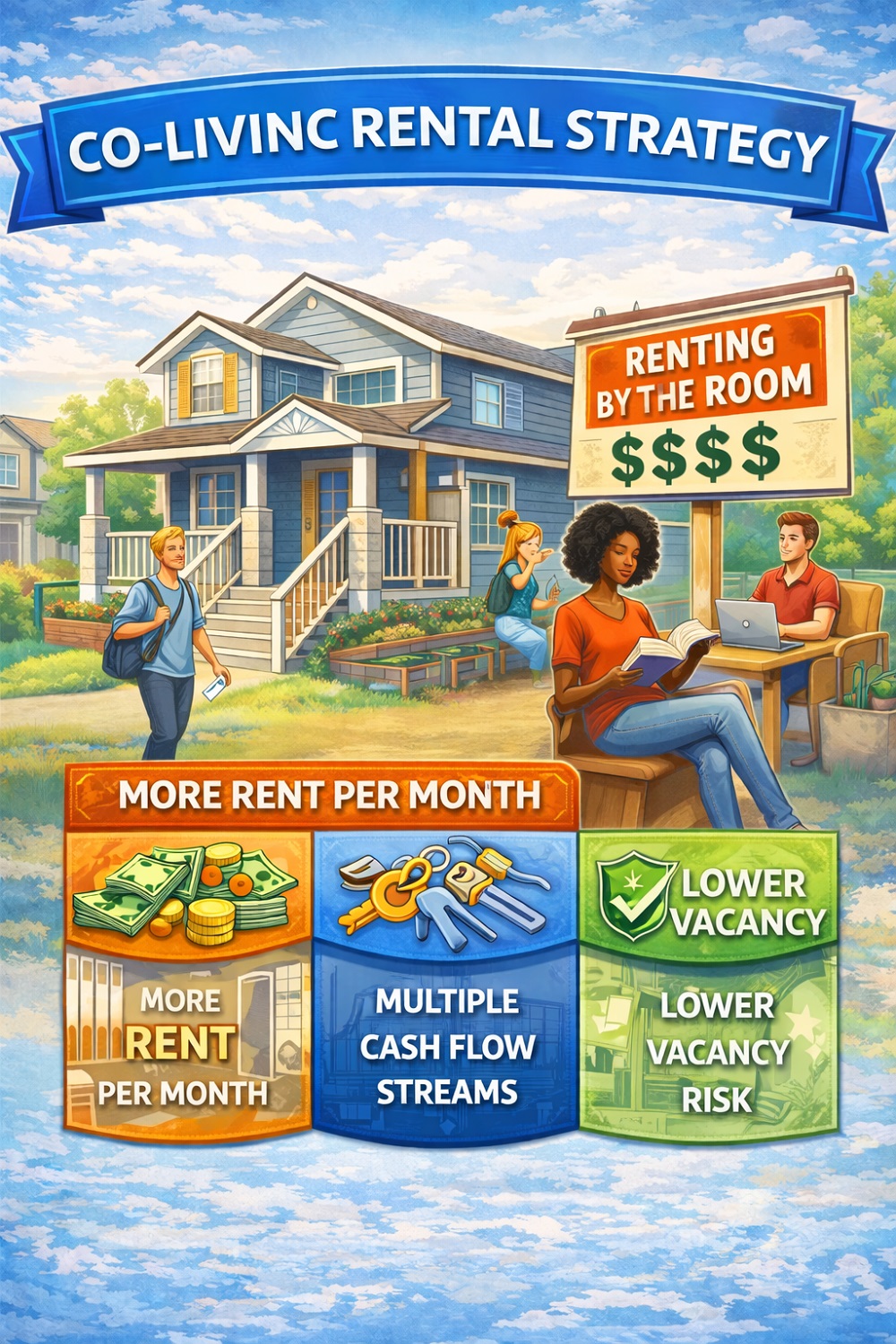
Instead of renting a property to one tenant or family, co-living allows you to rent individual rooms to multiple tenants, significantly boosting income potential.
In this guide, you’ll learn exactly how the co-living strategy works, why it can outperform traditional rentals, and how to implement it successfully.
What Is Co-Living in Real Estate?
Co-living is a rental strategy where:
- Multiple tenants live in one property
- Each tenant rents a private bedroom
- Common areas (kitchen, living room, bathrooms) are shared
Think of it as:
👉 A modern, upgraded version of shared housing
Why Co-Living Is Growing Fast
Several trends are driving demand:
- Rising housing costs
- Remote work flexibility
- Urban population growth
- Younger renters preferring affordability and community
👉 Co-living offers lower rent for tenants and higher income for landlords
How Co-Living Increases Cash Flow
Let’s compare:
Traditional Rental
- Rent entire home: $2,500/month
Co-Living Model
- 5 rooms × $900 = $4,500/month
👉 That’s an additional $2,000/month in income
Cash Flow Formula for Co-Living
Cash Flow=Total Room Rent−(Mortgage+Expenses)Cash\ Flow = Total\ Room\ Rent – (Mortgage + Expenses)Cash Flow=Total Room Rent−(Mortgage+Expenses)
Because you’re renting per room, your total income increases significantly.
Benefits of the Co-Living Strategy
1. Higher Cash Flow
This is the biggest advantage.
👉 Renting by the room = more income streams
2. Lower Vacancy Risk
If one tenant leaves:
- You still collect rent from others
👉 Income continues even with partial vacancy
3. Strong Demand in Urban Areas
Co-living works especially well in:
- Cities
- Areas near universities
- Tech hubs
- High-cost markets
4. Flexible Pricing
You can:
- Adjust rent per room
- Offer furnished units
- Charge premiums for larger rooms
5. Faster Portfolio Growth
Higher cash flow allows you to:
- Save faster
- Reinvest sooner
- Scale your portfolio
Challenges of Co-Living
While profitable, co-living isn’t perfect.
1. More Management
- Multiple tenants
- More communication
- More coordination
2. Potential Tenant Conflicts
Shared living spaces can lead to:
- Noise issues
- Cleanliness concerns
- Personality conflicts
3. Local Regulations
Some cities restrict:
- Number of unrelated tenants
- Room rentals
👉 Always check local laws before starting.
Step-by-Step Guide to Starting Co-Living
Step 1: Choose the Right Property
Not every property works for co-living.
Ideal Features:
- 4–6 bedrooms (or ability to add rooms)
- Multiple bathrooms
- Large common areas
- Good location
Best Locations:
- Near universities
- Near business districts
- Close to public transportation
Step 2: Optimize the Layout
You want to maximize rentable rooms.
Strategies:
- Convert extra space into bedrooms
- Add partitions where allowed
- Ensure privacy for tenants
Important:
👉 Follow building codes and safety regulations.
Step 3: Furnish the Property
Most co-living tenants expect furnished units.
Provide:
- Bed and mattress
- Desk and chair
- Closet or storage
- Shared furniture in common areas
Why Furnished Works
- Higher rent potential
- Attracts more tenants
- Reduces vacancy
Step 4: Set Pricing Per Room
Each room can be priced differently based on:
- Size
- Private bathroom
- Location within the house
Example Pricing:
- Small room: $800
- Medium room: $900
- Master bedroom: $1,200
👉 This maximizes total income.
Step 5: Market Your Property
Target renters who value affordability and flexibility.
Best Platforms:
- Facebook Marketplace
- Craigslist
- Room rental websites
- University housing boards
Listing Tips:
- Highlight affordability
- Emphasize community living
- Include high-quality photos
Step 6: Screen Tenants Carefully
Tenant compatibility is crucial in co-living.
Screen For:
- Cleanliness
- Lifestyle compatibility
- Income stability
- Respectfulness
👉 Good tenants = fewer conflicts
Step 7: Create Clear House Rules
Set expectations upfront.
Include Rules For:
- Cleaning
- Noise levels
- Shared space usage
- Guests
👉 Clear rules prevent issues later.
Step 8: Manage the Property Efficiently
Tips:
- Use group messaging for communication
- Schedule regular cleanings
- Respond quickly to issues
👉 Organization is key to success.
Co-Living vs Traditional Rentals
| Factor | Traditional Rental | Co-Living |
|---|---|---|
| Income | Lower | Higher |
| Tenants | One | Multiple |
| Vacancy Risk | High | Lower |
| Management | Easier | More complex |
👉 Co-living offers higher income but requires more effort.
Real-Life Example
Traditional Rental
- Rent: $2,500/month
- Expenses: $2,000
👉 Cash flow: $500
Co-Living Model
- 5 rooms × $900 = $4,500
- Expenses: $2,500
👉 Cash flow: $2,000
👉 That’s 4x more cash flow
Legal Considerations
Before starting:
- Check zoning laws
- Verify occupancy limits
- Ensure proper permits
- Update insurance coverage
👉 Avoid legal issues by doing your homework.
How to Scale Co-Living
Once you master one property:
- Replicate the model
- Standardize your process
- Build systems for management
👉 This turns co-living into a scalable business.
Common Mistakes to Avoid
❌ Ignoring local regulations
❌ Poor tenant screening
❌ Overcrowding property
❌ Lack of house rules
❌ Underestimating management
Who Should Use Co-Living?
Co-living is ideal for:
✔ Investors seeking higher cash flow
✔ Those comfortable with active management
✔ Investors in high-demand rental markets
Final Thoughts
Co-living is one of the most powerful strategies for increasing rental income.
It allows you to:
- Maximize property value
- Reduce vacancy risk
- Generate significantly higher cash flow
But success depends on:
👉 Proper setup, strong management, and good tenant selection
FAQs
Is co-living legal everywhere?
No—always check local laws and zoning regulations.
How many tenants can you have?
Depends on local occupancy rules.
Is co-living worth it?
Yes, if managed properly—it can significantly increase profits.
Ready to Boost Your Cash Flow?
If you’re looking to maximize income from your rental property, co-living could be the strategy that changes everything.
Start small, test the model, and scale over time.
Because in real estate investing…
👉 More income streams = more financial freedom
Disclaimer:
The information provided in this article is for educational and informational purposes only and should not be considered financial, legal, or investment advice. Real estate investing involves risks, and you should conduct your own research and consult with a licensed professional before making any investment decisions.
No Responses