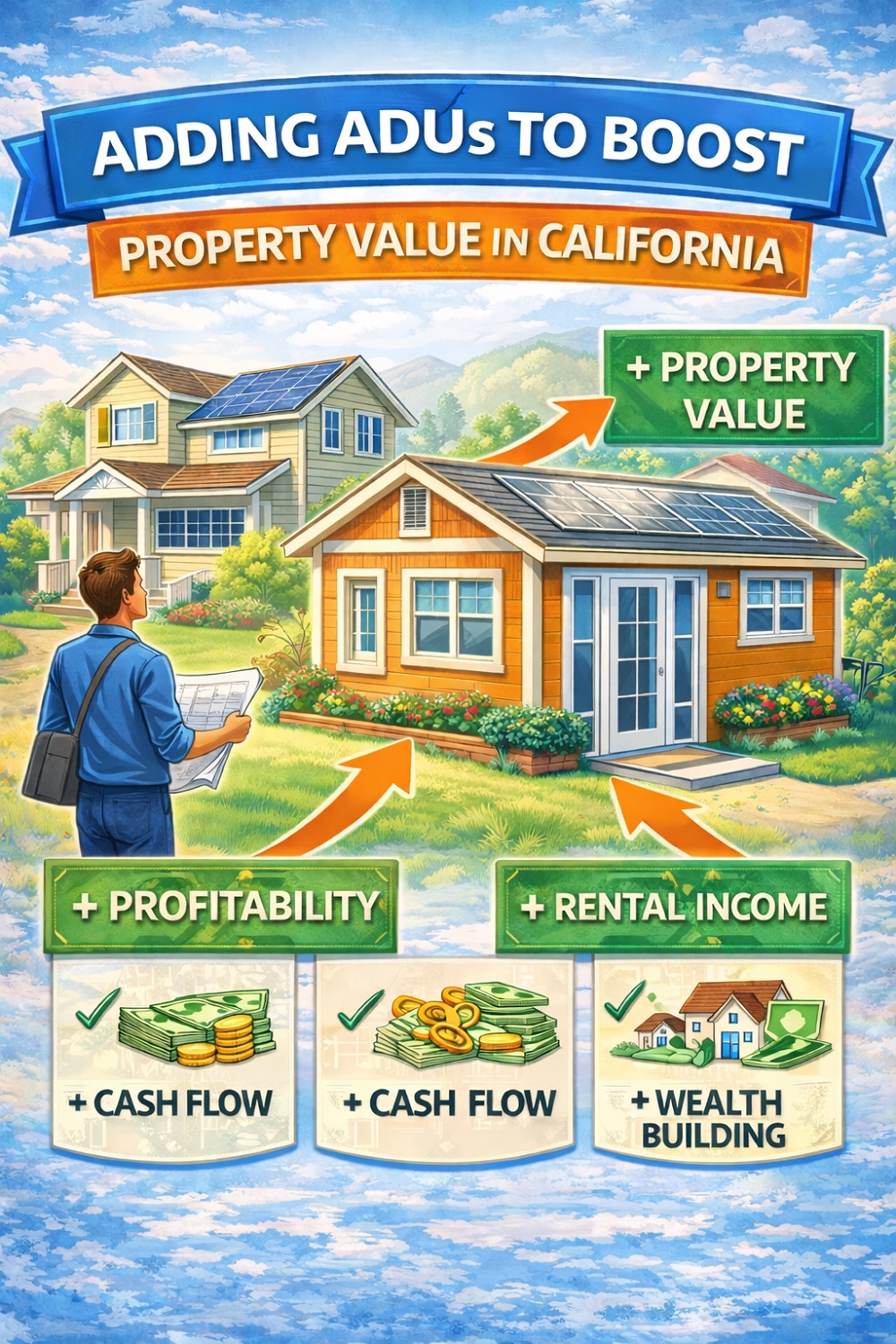
California real estate investors and homeowners are increasingly turning to one powerful strategy to increase property value and generate income:
👉 Accessory Dwelling Units (ADUs)
With housing shortages, rising property prices, and favorable state laws, ADUs have become one of the smartest ways to maximize real estate potential in California.
In this guide, you’ll learn how adding an ADU can boost property value, increase cash flow, and accelerate wealth building—plus everything you need to know to get started.
What Is an ADU?
An Accessory Dwelling Unit (ADU) is a secondary housing unit on a residential property.
It can be:
- A detached backyard unit
- A converted garage
- A basement apartment
- An attached addition
👉 Think of it as a mini-home on your existing property
Why ADUs Are Booming in California
California has made ADUs easier than ever to build due to:
1. Housing Shortage
The state faces a massive housing deficit, driving demand for:
- Affordable rental options
- Flexible living arrangements
2. Pro-ADU Laws
Recent laws allow:
- Faster approvals
- Reduced permit restrictions
- More flexible zoning
👉 Many cities now approve ADUs in 60 days or less
3. Rising Property Values
ADUs increase:
- Usable space
- Rental income potential
- Overall property value
How ADUs Increase Property Value
ADUs boost value in two main ways:
1. Income-Based Value Increase
Properties with rental income are often valued higher.
Example:
- ADU rent: $1,800/month
- Annual income: $21,600
👉 This added income increases your property’s worth significantly.
2. Market Demand
Buyers are willing to pay more for:
- Extra living space
- Rental income potential
- Multi-generational housing
👉 ADUs make properties more attractive and versatile.
ADU ROI Formula
ROI=Annual Rental IncomeADU Construction Cost×100ROI = \frac{Annual\ Rental\ Income}{ADU\ Construction\ Cost} \times 100ROI=ADU Construction CostAnnual Rental Income×100
Example:
- ADU cost: $150,000
- Rent: $1,800/month ($21,600/year)
👉 ROI = ~14.4% annually
Types of ADUs in California
1. Detached ADU
- Separate structure
- Highest value potential
- Most privacy
2. Attached ADU
- Built onto main house
- Lower cost than detached
3. Garage Conversion
- Converts existing garage
- Cost-effective option
4. Junior ADU (JADU)
- Smaller unit (typically under 500 sq ft)
- Lower construction costs
Cost of Building an ADU in California
Costs vary depending on type and location.
Average Costs:
- Garage conversion: $80,000–$150,000
- Attached ADU: $100,000–$200,000
- Detached ADU: $150,000–$350,000+
Factors Affecting Cost:
- Size of unit
- Materials
- Labor costs
- Permits and fees
- Utilities and hookups
👉 California construction costs are higher—but so are rental returns.
Rental Income Potential
ADUs can generate strong monthly income.
Example (California Market):
- Studio ADU: $1,200–$1,800
- 1-bedroom ADU: $1,500–$2,500
- 2-bedroom ADU: $2,000–$3,500
👉 Location plays a huge role in pricing.
Benefits of Adding an ADU
1. Increased Cash Flow
ADUs create:
- Additional rental income
- Faster mortgage payoff
- Stronger financial stability
2. Higher Property Value
More usable space = higher valuation.
3. Flexible Use
You can use an ADU for:
- Rental income
- Family housing
- Home office
- Short-term rentals (where allowed)
4. Faster Wealth Building
ADUs accelerate:
- Equity growth
- Portfolio expansion
ADUs vs Traditional Investments
| Strategy | Income Potential | Cost | Risk |
|---|---|---|---|
| Rental Property | Moderate | High | Moderate |
| ADU Addition | High | Medium | Lower |
👉 ADUs often provide high returns with lower risk.
Step-by-Step Guide to Building an ADU
Step 1: Check Local Regulations
Even though California supports ADUs:
- Local rules still apply
- Zoning laws vary
Key Things to Check:
- Lot size requirements
- Setback rules
- Parking requirements
- Height limits
Step 2: Plan Your Design
Focus on:
- Efficient layout
- Privacy
- Natural light
👉 Smaller, functional designs perform best.
Step 3: Get Permits
Most cities:
- Require permits
- Have streamlined processes
👉 Work with professionals to speed up approval.
Step 4: Hire the Right Team
You’ll need:
- Architect or designer
- Contractor
- Permit specialist
👉 A strong team prevents costly mistakes.
Step 5: Build the ADU
Construction timeline:
- 3–9 months (average)
👉 Plan for delays and budget buffers.
Step 6: Rent It Out
Once completed:
- List your ADU
- Screen tenants
- Start generating income
Financing an ADU
Common Options:
- Home equity loan (HELOC)
- Cash-out refinance
- Construction loans
- Personal savings
👉 Many investors use equity from their home.
ADU Tax Benefits
ADUs offer several tax advantages:
- Depreciation deductions
- Expense write-offs
- Mortgage interest deductions
👉 Consult a CPA for maximum benefits.
Risks to Consider
1. High Upfront Cost
ADUs require significant investment.
2. Construction Delays
Permits and labor shortages can slow progress.
3. Local Restrictions
Not all areas allow the same flexibility.
👉 Always research before starting.
Best Locations for ADUs in California
ADUs perform best in:
- Los Angeles
- San Diego
- Bay Area
- Sacramento
- College towns
👉 High-demand areas = higher rent.
ADU Investment Example
Scenario:
- Build cost: $180,000
- Rent: $2,000/month
- Annual income: $24,000
👉 Payback period: ~7.5 years
After that:
👉 Mostly profit + increased property value
Common Mistakes to Avoid
❌ Not checking zoning laws
❌ Underestimating costs
❌ Poor design layout
❌ Hiring inexperienced contractors
❌ Overbuilding beyond market demand
Who Should Consider ADUs?
ADUs are ideal for:
✔ Homeowners wanting extra income
✔ Investors looking to increase ROI
✔ Families needing additional living space
✔ Long-term wealth builders
ADUs vs Buying Another Property
ADU Advantages:
- Lower cost than buying new property
- Faster setup
- Lower risk
Buying Another Property:
- Higher capital required
- More complexity
👉 ADUs are often the easier entry point.
Future of ADUs in California
ADUs are expected to:
- Continue growing in popularity
- Increase property values
- Help solve housing shortages
👉 Early adopters benefit the most.
Final Thoughts
Adding an ADU is one of the smartest real estate strategies in California today.
It allows you to:
- Increase property value
- Generate strong rental income
- Build wealth faster
But success depends on:
👉 Smart planning, budgeting, and execution
FAQs
How long does it take to build an ADU?
Typically 3–9 months, depending on complexity.
Are ADUs worth it in California?
Yes—especially in high-demand rental markets.
Can I rent out my ADU?
Yes, long-term rentals are widely allowed.
Ready to Boost Your Property Value?
If you’re looking for a high-impact investment, an ADU could be your best move.
Start planning, run your numbers, and take action.
Because in California real estate…
👉 More space = more income = more wealth
Disclaimer:
The information provided in this article is for educational and informational purposes only and should not be considered financial, legal, or investment advice. Real estate investing involves risks, and you should conduct your own research and consult with a licensed professional before making any investment decisions.
No Responses